
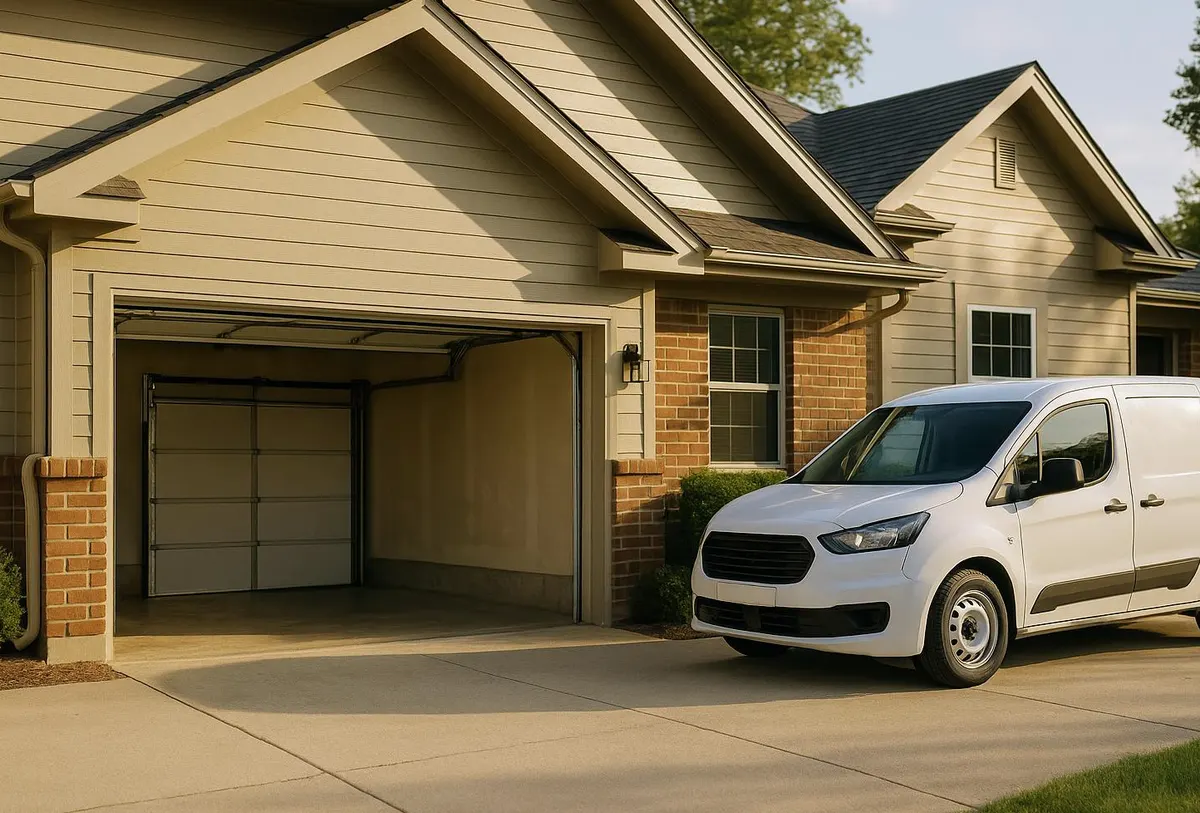
What a Technician Sees After a Storm Rolls Through
A typical call after a wind event looks the same almost every time: a door that's bowed outward in the middle like it took a breath and never let it out, tracks pulled away from the wall on one side, and rollers that popped out of their channel because the door flexed more than it was built to. Sometimes it's quieter damage — a torn bottom seal letting rain sheet under the door, or hinges rusted stiff from months of humidity that finally gave way under load. By the time the homeowner calls, the door is usually stuck half-open, jammed shut, or hanging crooked, and the garage has already taken on water.
October in this part of Florida still means active hurricane season. Afternoon downpours are routine, but it's the tropical systems and straight-line wind events that do the real damage, and the garage door is almost always the first thing to fail.
Why the Garage Door Is a Home's Weakest Wall
Every other exterior wall on a house is a solid, continuous surface. The garage door is a large panel of thin metal or fiberglass held in place by springs, cables, rollers, and a track system — not by the kind of structural framing that holds up the rest of the building. When wind pushes against that panel, it's pushing on the biggest, least reinforced opening in the house.
If the door fails — buckles inward, blows out, or comes off its track — wind suddenly has a way into the structure. Pressure builds inside the garage and pushes up against the roof from underneath, which is a common way roofs get torn off in high-wind events. A door that holds is doing more than protecting your car and tools; it's keeping the whole envelope of the house intact.
Signs Your Current Door Won't Hold
- Visible bowing or flexing when the door is closed and wind pushes on it, even in a moderate storm.
- Rusted or pitted tracks and hardware from months of humidity and salt-laden air, which weakens the metal exactly where it needs to be strongest.
- Loose or missing track bolts — a track that's barely hanging on will pull free under wind load long before the panel itself fails.
- Worn rollers that rattle, bind, or have visible cracks; they're more likely to jump the track when the door flexes.
- A door with no wind-load rating, especially older installations that predate current wind-resistant door standards. If you don't know whether yours is rated, that's worth finding out before storm season, not during it.
Pre-Storm Checklist for This Season
Most of this takes an afternoon and basic tools. The goal is to remove the weak points before wind finds them for you.
- Inspect and tighten all hardware. Track brackets, roller brackets, and hinges all loosen over time from vibration and daily use. A socket wrench and twenty minutes catches most of it.
- Check spring tension and balance. Disconnect the opener and lift the door halfway by hand. It should stay put. If it drifts up or crashes down, the springs are off balance and the door will struggle under any added wind pressure. This is not a DIY spring adjustment — torsion springs are under heavy tension and can cause serious injury if handled wrong.
- Look at the tracks for rust and bends. Humidity and salt air cause surface rust that can spread into pitting, which weakens the track exactly where it's bolted to the wall. A bent track, even slightly, won't let rollers travel smoothly under stress.
- Replace worn weatherstripping along the bottom and sides. It won't stop wind, but it stops wind-driven rain from pooling inside during the sideways downpours this area gets.
- Add horizontal bracing if your door doesn't already have it. Retrofit kits reinforce the panels against the kind of flexing that leads to buckling.
- Test the opener's manual release and battery backup if it has one. Power outages are common during storms, and you want to be able to open or close the door by hand if needed.
- Clear the track channels of debris and lubricate rollers and hinges with a garage-door-specific lubricant, not household oil, which attracts dust and grit in humid conditions.
A Note on Moisture and Rust
Between the humidity, salt air drifting inland, and the swelling and shrinking that wood and composite panels go through with seasonal moisture changes, hardware here ages faster than it does in drier climates. A spring or roller that looks fine in April can be seized or corroded by October. Regular maintenance isn't just about smooth operation — it's what keeps the hardware strong enough to do its job when wind actually tests it.
When to Call Mcalpin Garage Door Experts
If your door is bowing under wind, the tracks have visible rust or looseness, or the door won't balance correctly when you test it, it's time to get it looked at before the next system rolls through. Our Garage Door Maintenance service covers the full inspection — hardware, track alignment, spring balance, and lubrication — so small issues get caught before a storm turns them into a failed door. If the door is already off track, bent, or damaged from a previous storm, our Off Track Door Repair and Cable & Roller Replacement services get it back into working, storm-ready condition rather than just patched together.
If you're in Mcalpin, Live Oak, O'Brien, Branford, Wellborn, Mayo, Dowling Park, or Lee and you want your garage door checked before the next storm warning, call Mcalpin Garage Door Experts today for fast, reliable service across Suwannee County.